Trusted by leaders in healthcare


The value we add
The value we add, in seven steps
Our value isn't "we have the data." It's the operated pipeline that turns fragmented, duplicated, multi-source data into one trustworthy record.
01
Find
Locate every record, across networks that don't share one rulebook.
02
Know it's them
Match the right person when names and birthdates never quite line up.
03
Chase the gaps
Automatically go find records at clinics you didn't know to ask.
04
Translate
Turn many formats and code systems into one clean record.
05
De-duplicate
Collapse the same fact arriving three ways into one.
06
Decide what's true
Reconcile conflicting results into a single trustworthy chart.
07
Prove and deliver
Every fact traceable to its source, every access logged.
And the moment something changes
Clinical Alerts. Awareness the moment anything happens, listening across all network activity, not just the hospital.
Who we serve
We give you a complete, trustworthy record. You don't have to build any of it.
Humanizing the record
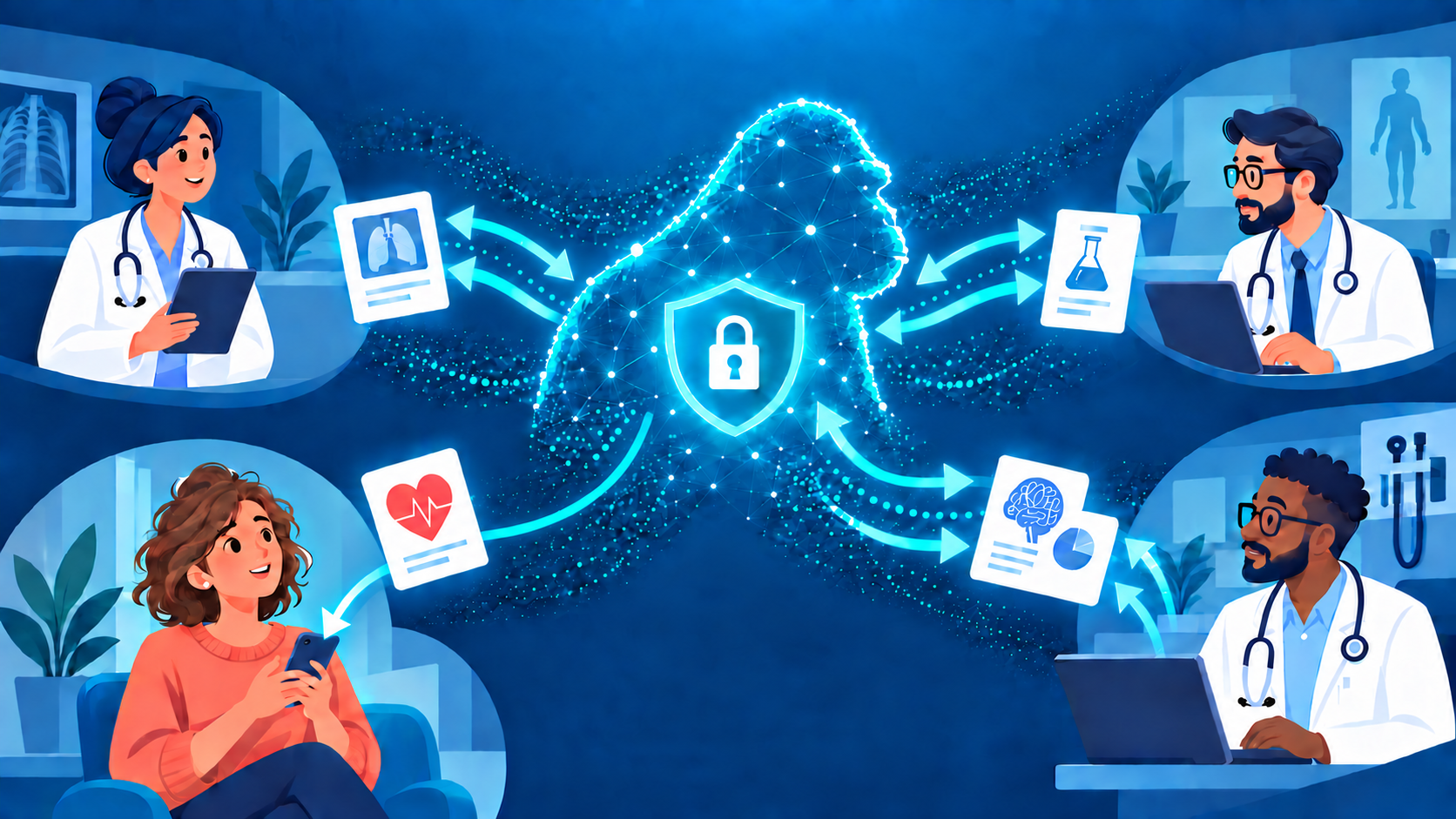
Every one of these products ends at a person. That's what you're really paying for.
A clinician with context
A member seen whole
A patient whose story arrives before she does
Universal data access. Compliant at our core.
Government framework
Health Gorilla is the nation's only dual-designated QHIN & QHIO, enabling participation in TEFCA and CA's Data Exchange Framework.


Powerful security
We maintain an ironclad data security, privacy, and governance program that protects patient data.


Experienced team
Our leadership team continues to create the policies & frameworks that govern US health information exchange.


At the forefront of interoperability

The California DxF and the Role of QHIOs for Payers
A guide to the California Data Exchange Framework (DxF), the instrumental role of Qualified Health Information Organizations (QHIOs), and the implications for healthcare payers doing business in California.

State of Interoperability
Get a comprehensive look at how healthcare decision-makers are leveraging patient data for new use cases, navigating data quality and access issues, and responding to new data sharing laws.